Saturday, June 18, 2011

Tel Aviv and a Break In


 At this point I've been to Tel Aviv several times, but haven't gotten around to writing about it.  Tel Aviv could not be more different from Jerusalem; it is a secular city known for its nightlife and beautiful beaches.  So, of course, we students love it there and take the sherut (Israel's awesome, cheap shared taxi system) every chance we get to stay a night or two.


On yesterday's visit, we had ten people going, enough to affordably split two rooms at the fancy Carlton hotel.  An acquaintance just opened a new club this week, Merhav Yarkon, in a former police station, so we spent a lot of the evening there.  I absolutely loved this place! 

The main area was a sort of open air atrium, surrounded by former jail cells looking down.  I know in the photo the flash makes the building look terrible, but in the dark with lights flashing and pictures moving on the walls, the effect was awesome.  It had a very underground, industrial feel but with the night sky breeze!
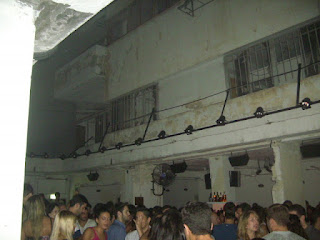
Found a better picture online... not mine.


This morning we went to a delicious breakfast place, then ran into two of our professors on the beach!  (Tel Aviv is about an hour away from Jerusalem.)  They bought us each a drink and we chatted for awhile.  There are five professors with our group, and they are all wonderful, extremely friendly and interesting people.


Professors Morris and Klein

Later, as my roommate and I were enjoying the AMAZING rooftop of our hotel (it is worth any money to stay a night at this place for these views alone), we received a call from another friend in our group that there had been a break-in at our hostel and several people had had items stolen.  Apparently it was an inside job. 

It was a stressful hour or so as we struggled to find someone who could check on our room as we took the sherut back to Jerusalem.  Our room was indeed hit and my roommate's laptop and cash was stolen, but somehow none of my things were touched... including my laptop sitting out on my desk.  Thank goodness for me, but very perplexing.  Our program director was affected worst of all- laptop, phone, money and passport.  The police came and checked things out but it is likely nothing will be resolved. Crazy evening here at the Agron.


Monday, June 13, 2011

Knesset and Mount Herzl

Last Thursday (yes, I'm two weeks behind!) we had a late class schedule so that we could visit the Knesset, the Israeli parliament.  We weren't allowed to bring cameras in so I don't have much to show from our visit, but when we were all sitting around a large table after watching a video our guide pointed to me and said she hoped that I was comfortable because I was sitting in Prime Minister Netanyahu's chair...I thought that was pretty cool!  Many of the nation's most powerful moments have occurred at the Knesset, notably Anwar Sadat's 1977 speech to call for peace with Egypt, and President Clinton's speech in 1994 after the signing of the peace treaty with Jordan.


After our tour of the Knesset, we stopped on Mount Herzl, a Jewish national cemetery where Israeli Defense Force soldiers are buried.  It was named for the founder of Zionism, Theodor Herzl, whose tomb is on the top of the hill. Mount Herzl is beautiful, even if I'm a weirdo who loves cemeteries.

Prime Minister Yitzhak Rabin's grave is also located here (right).  He did a lot towards achieving peace in the region, even winning the Nobel Prize, but was assassinated by a right wing law student in 1995.  It was such a sad story. 


There were many soldiers walking around to learn the stories of the people buried, so that they can tell others.  All Israelis, men and women, are mandated to serve in the IDF when they turn 18.  After weeks I still find it strange to see so many young people walking around everywhere with huge machine guns!


Wednesday, June 8, 2011

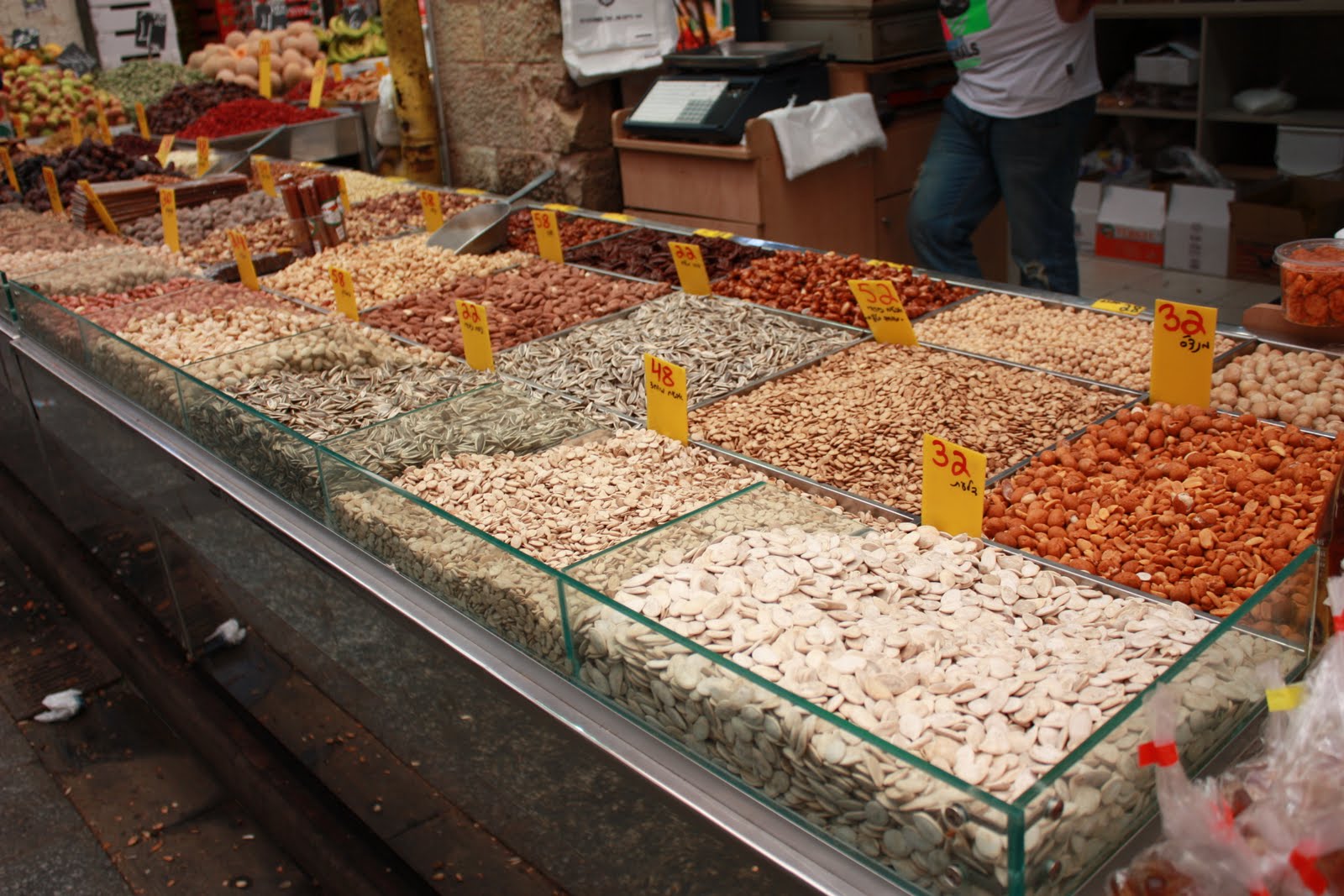
Photos from Shuk Mahane Yehuda- Outdoor Marketplace


My Jerusalem Courses

International Human Rights Law (2 credits)
Professor Richard Klein

The emphasis of this course will be on the political, economic and civil rights provided by documents such as the International Bill of Human Rights. Topics will include the relationship between civil liberties and religious beliefs in Muslim countries as well as in Israel, and legal issues raised by the Middle East conflict. Particular consideration will be given to the status of the Arab population residing within the state of Israel. Attention will also be devoted to the economic and political relationship of the Palestinians and the Jewish settlers residing in the disputed territories.
 
The Arab-Israeli Conflict and its Resolution: Selected International Legal Aspects (2 Credits)
Dr. Barry Feinstein
In this day and age of ever-increasing globalization and the trend toward seeking out international aspects of almost every potential legal issue imaginable, it is crucial to recognize and appreciate the relevance of international law in our daily lives.  International law also has a vital role to play in addressing the need to enhance greater awareness and understanding of complex international issues relating to the Arab-Israeli conflict. The discussion in this course therefore will focus on an overview of international law as it relates to subjects including the following:  Legal issues arising out of important historical events in the context of the Arab-Israeli conflict such as the McMahon - Hussein correspondence (1915-1916), the Balfour Declaration (1917), the Feisal - Weizmann agreement (1919), the British Mandate (1920-1948), the “Partition Resolution” of the United Nations General Assembly (1947), Declaration of the Establishment of the State of Israel (1948); the influence of Arab States non-recognition of Israel on the Arab-Israeli conflict; the legality of the use of force and self-defense in light of international law in the context of the Arab-Israeli conflict, for example in the War of Independence (1948-1949), the Sinai Campaign (1956), the Six-Day War (1967), the Yom Kippur War (1973), Operation Yonatan (Entebbe) (1976), the bombing of the Iraqi nuclear reactor (1981), and Operation Peace for the Galilee (1982); freedom of navigation in international waterways in the Middle East pursuant to the Law of the Sea; and prospects for peaceful resolution of the Arab-Israeli conflict.
 
Civil Liberties in an Age of Terrorism  (2 credits)
Professor Eileen Kaufman
This course will explore how the United States and Israel have responded to the tension between a commitment to protecting civil liberties and a need for enhancing national security. Among the issues that will be discussed are: the use and definition of torture; the indefinite detention of persons thought to be linked to terror; the conditions of confinement of suspected terrorists; and the legality of various military measures aimed at destroying the terrorism infrastructure and preventing further terrorist attacks. Central to our study will be an exploration of the appropriateness of judicial review of issues affecting national security. The U.S. response will be contrasted to Israel’s response to persistent acts of terrorism, with particular attention paid to the role of the Israeli Supreme Court.

Kotel Tunnels- and small history lesson :)

Sorry, sorry.  I'm alive!  I knew I would be busy, but I cannot believe how unbelievably busy things have been!  It seems I have not had a minute of down time, or more than 5 hours of sleep a night since I left Michigan.  Ah well, I will try to catch up about some of the things I've been doing.  Last Tuesday, the evening of our first day of classes, we went on a group tour of the Kotel Tunnels.  This was absolutely incredible and will be difficult to explain.


For a brief history of the Temple Mount area, which I will hopefully get right, this is one of the most important religious sites for Judaism, Christianity and Islam.  This is the location where God asked Abraham to sacrifice his son, and where King Solomon built the first temple in 957 BC.  Here in the first temple was the Holy of Holies, where the Ark of the Covenant (containing the Ten Commandments) was kept.  Solomon's temple was destroyed by the Babylonians and the Ark was lost.  A second temple was built, and renovated by King Herod around 19 BC.  Herod expanded the Temple Mount by building retaining walls on the hills.


The second temple was destroyed in 70 AD by the Romans.  The reason Jews cannot go on the Temple Mount itself is so that they don't unintentionally walk on the site of the Holy of Holies since we can't know exactly where it stood.  Al Aqsa Mosque and the Dome of the Rock stand on the site today.  The Western Wall, or Kotel, is an exposed section of what remains from the ancient retaining walls, and is sacred because of its vicinity to the site of the Holy of Holies.

The next part is complex and I was too confused to understand the details, but basically over all these centuries and periods of different rulers, arches and streets and neighborhoods were built on top of each other until the city was closer to ground level with the Temple Mount.  The Kotel Tunnels are an excavation of this area to expose the entire length of the Western Wall.  It is pretty amazing to go down there and see and touch all these archaeological finds.  Also, inside the tunnel is the portion of the Wall that is directly across from the site of the Holy of Holies, the closest physical point, so it is regarded as the holiest place on earth.  So many people make pilgrimages here and pray and sob and tuck notes into the cracks of the rocks.  Really amazing to be there.


Demonstration showing how the city was built up to the Temple Mount


Diagram showing the bedrock (white) and the tunnels (orange) under the Temple Mount.  The white lines on the far right make the Western Wall.


Inside the tunnels...


The Western Stone (bottom of photo)- one of the largest building blocks in the world, weighing 570 tons.  It is about 44x10x11 feet.  (So how did they get it up there????)


Prayers tucked between the stones


Here it is... what many believe to be the holiest place on earth.


Tunnels, beneath the streets of the Old City


Western Wall at night


Wednesday, June 1, 2011

Jerusalem- Church of the Holy Sepulchre

One of the first places I went after arriving in Jerusalem was to the Church of the Holy Sepulchre, the site of Golgotha- where Jesus was both crucified and buried.  Here you can enter Jesus' tomb, see a fragment of the stone that sealed his tomb, and touch the stone slab where his body was laid before burial.  The church itself was originally built around 330 A.D. though it was later mostly destroyed and reconstructed in the 1100's. It is the most beautiful place I think I've ever seen, and pretty indescribable so here it is in photographs.